01
wellflat/imageprocessing-labs
+0.1 ★/day→steady
Classic image processing and ML algorithms implemented in JavaScript, no GPU cluster required.
Classic image processing and ML algorithms implemented in JavaScript, no GPU cluster required.
A wrapper around Google's speech services that handles the tedious audio plumbing so you don't have to.
Five algorithms, incremental LSI, and a CLI that actually works for multi-gigabyte datasets.
A PHP-native library that brings text analysis, sentiment scoring, and document classification to codebases that can't justify a Python microservice.
A thin, friendly wrapper around FANN that keeps the native speed while letting you stay in Ruby syntax.
A linear algebra and optimization library that stays self-contained even when doing sparse matrices, quaternions, and neural nets.
A decade-old open-source platform for running ML competitions, now gently nudging users toward its own successor.
Companion code for the Chinese translation of "Programming Computer Vision with Python," collected in one repo so you don't have to type it out yourself.
A wrapper that wants you to graduate to raw OpenCV, not stay dependent on its abstractions.
Trains models that guess how words sound, because you can't ship a pronunciation dictionary for every proper noun the user will invent.
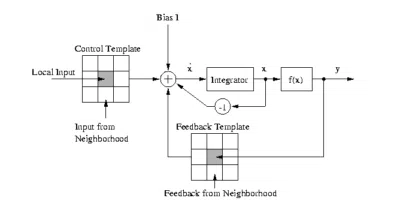
A Python library that implements 1988-era Cellular Neural Networks for edge and corner detection—no GPUs required, just scipy and template math.
DIPY has spent a decade turning raw diffusion MRI data into maps of neural pathways that researchers actually argue about.
DeepLogo wraps TensorFlow's Object Detection API around the Flickr Logos 27 dataset, mostly as a working reference implementation.
A NumPy-native computer vision library that predates the deep-learning takeover and keeps chugging.
The original DBpedia Spotlight entity linker still works, but the maintainers have packed up and left for a cleaner, Apache-licensed rewrite.
DiffSharp brings differentiable programming to .NET with a functional twist and a Torch backend.
A grab-bag of classic AI coursework—neural nets, genetic algorithms, adversarial attacks—sitting in Jupyter notebooks waiting for the curious.
Six standalone deep learning implementations for developers who'd rather read code than prose.
Video object tracking built from off-the-shelf parts for the ImageNet VID competition, with the rough edges left visible.
AI-Toolbox wraps MDP and POMDP solvers in readable C++ with Python bindings, borrowing from the classic Matlab MDPToolbox and Cassandra's pomdp-solve.
heatdrop uses Google Analytics to see which pages get read — nothing else. Your call. How we handle data.