openinterpreter/openinterpreter
ChatGPT's Code Interpreter escaped the sandbox
Open Interpreter gives LLMs a local shell so they can edit files, plot data, and control browsers without OpenAI's sandbox limits.
Velocity · 7d
+6.1
★ / day
Trend
→steady
star history
What it does
Open Interpreter is a terminal chat interface that lets large language models execute Python, JavaScript, shell, and more directly on your local machine. It turns natural language into system actions—editing media, controlling Chrome, analyzing datasets—using your own packages and filesystem rather than a remote sandbox.
The interesting bit
The project is essentially a rebellion against ChatGPT’s Code Interpreter, which is hosted, internet-less, and capped at 100 MB uploads and 120-second runtimes. Open Interpreter tears down those walls but keeps one hand on the emergency brake: every code execution requires your explicit approval before it touches your system.
Key highlights
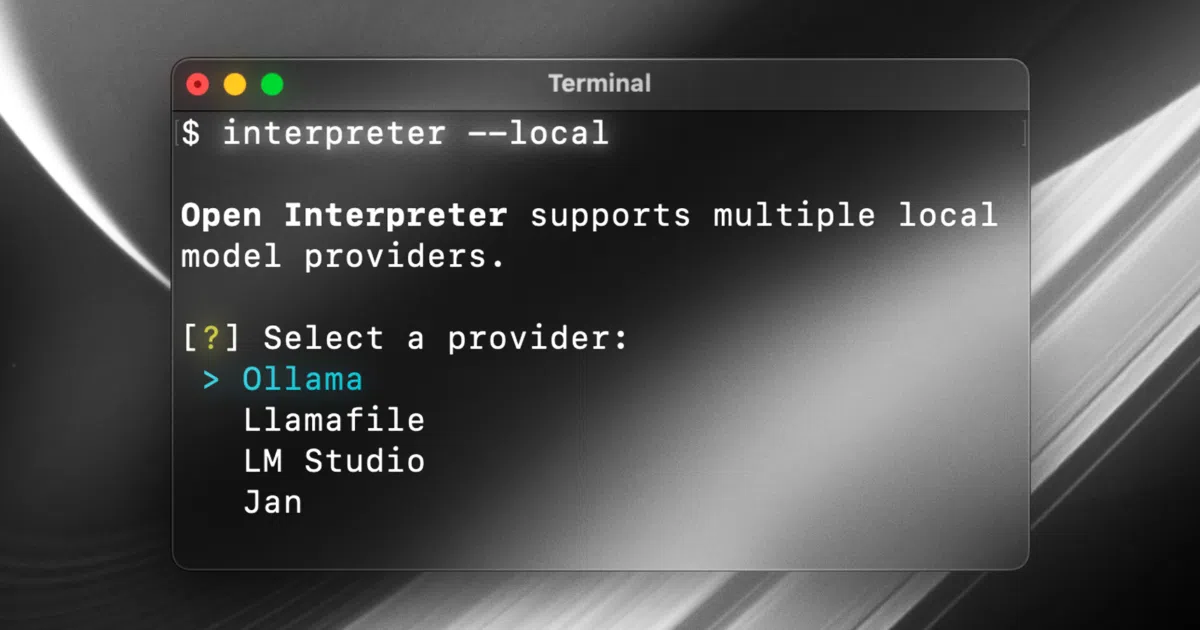
- Plugs into local models via LM Studio, Ollama, or Llamafile, or hosted APIs through LiteLLM
- No artificial caps on file size, runtime, or internet access
- Supports streaming responses, conversation memory, and programmatic Python embedding
- Can be exposed as a FastAPI server for HTTP-based integration
- Configurable via YAML profiles and interactive terminal commands like
%resetand%undo
Caveats
- Safety is opt-in: the confirmation prompt can be bypassed with
-yorauto_run = True, at which point the tool can modify or delete files autonomously - Local mode defaults to a tight 3000-token context window, which may choke on larger tasks unless manually adjusted
Verdict
A solid choice for developers who want an LLM that can actually manipulate their local environment and files. Skip it if you need a fully hands-off autonomous agent—this one asks for permission by design.
Frequently asked
- What is openinterpreter/openinterpreter?
- Open Interpreter gives LLMs a local shell so they can edit files, plot data, and control browsers without OpenAI's sandbox limits.
- Is openinterpreter open source?
- Yes — openinterpreter/openinterpreter is open source, released under the Apache-2.0 license.
- What language is openinterpreter written in?
- openinterpreter/openinterpreter is primarily written in Rust.
- How popular is openinterpreter?
- openinterpreter/openinterpreter has 68.5k stars on GitHub and is currently holding steady.
- Where can I find openinterpreter?
- openinterpreter/openinterpreter is on GitHub at https://github.com/openinterpreter/openinterpreter.