fastai/fastai
Deep Learning for the Impatient and the Obsessive
fastai wraps PyTorch in a layered API that lets beginners train classifiers in five lines and researchers rewrite the optimizer in four.
Not currently ranked — collecting fresh signals.
star history
What it does
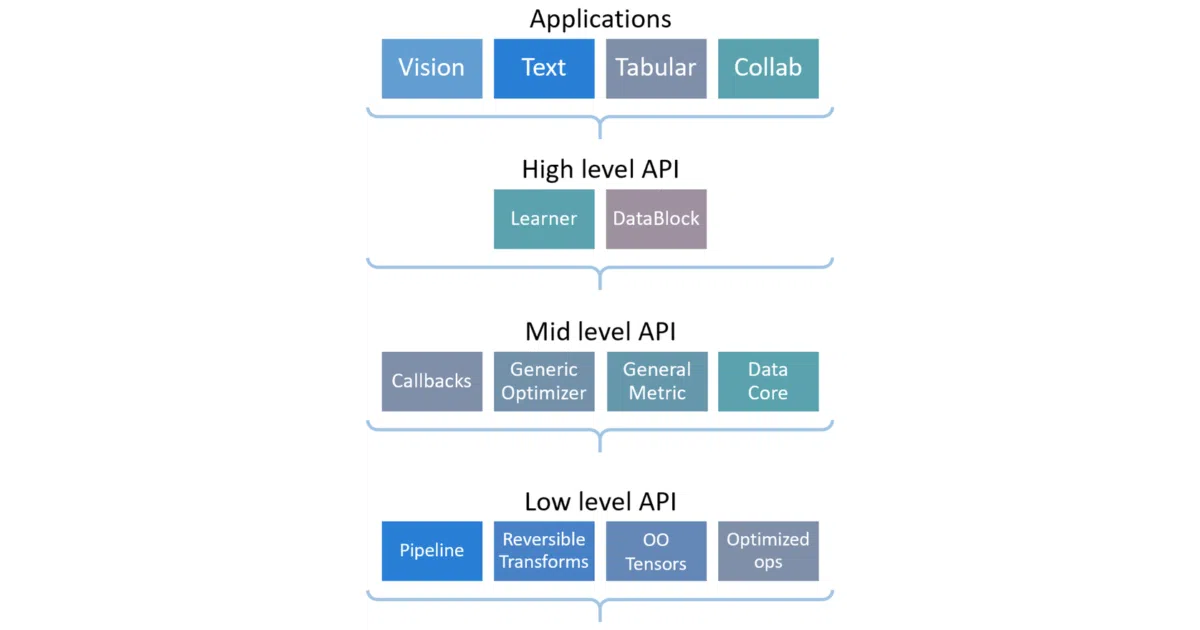
fastai is a PyTorch-based deep learning library that tries to serve two masters at once. It offers high-level, application-specific APIs for image classification, segmentation, NLP, tabular data, and recommendations that aim to minimize boilerplate. Underneath, it exposes a hierarchy of lower-level, composable building blocks so you can swap out data loaders, callbacks, or optimizers without fighting the framework.
The interesting bit
The architecture is deliberately layered, with decoupled abstractions that express common deep learning patterns through Python’s dynamism rather than rigid inheritance. The standout pieces are a 2-way callback system that can reach into any part of the training loop mid-flight, and an optimizer refactored into two basic pieces so that implementing a new algorithm becomes a short exercise rather than a rewrite.
Key highlights
- A type dispatch system and semantic tensor hierarchy that extend Python itself
- GPU-optimized computer vision primitives that can be extended in pure Python
- Migration guides from PyTorch, Ignite, Lightning, and Catalyst for gradual adoption
- Every documentation page doubles as an interactive Colab notebook
- Peer-reviewed paper backing the design philosophy
Caveats
- On Windows, Jupyter notebooks automatically reset
DataLoadernum_workersto zero to avoid hangs, which the README admits makes computer vision tasks “many times slower” than on Linux; the maintainers recommend WSL.
Verdict
Good for practitioners who want standard deep learning tasks off the ground quickly, and for researchers who need to instrument training loops without rewriting the whole stack. Less compelling if you are already deeply invested in another high-level framework and have no itch to peel back the layers.
Frequently asked
- What is fastai/fastai?
- fastai wraps PyTorch in a layered API that lets beginners train classifiers in five lines and researchers rewrite the optimizer in four.
- Is fastai open source?
- Yes — fastai/fastai is open source, released under the Apache-2.0 license.
- What language is fastai written in?
- fastai/fastai is primarily written in Jupyter Notebook.
- How popular is fastai?
- fastai/fastai has 28.3k stars on GitHub.
- Where can I find fastai?
- fastai/fastai is on GitHub at https://github.com/fastai/fastai.